

Containers, as the primary tools for transporting goods across land, sea, and rail routes, play a crucial role in the global supply chain. These units are designed in various sizes and types, ranging from standard 20- and 40-foot containers to refrigerated, tank, open-top, and flat-rack containers. Each type serves a specific purpose and is selected based on the nature of the cargo and the transportation conditions.
However, over time, due to continuous use, exposure to weather, heavy loading, and long-distance transport, containers experience wear and tear. For this reason, container maintenance and repair are essential for cargo owners and logistics companies.
The Importance of Container Repair
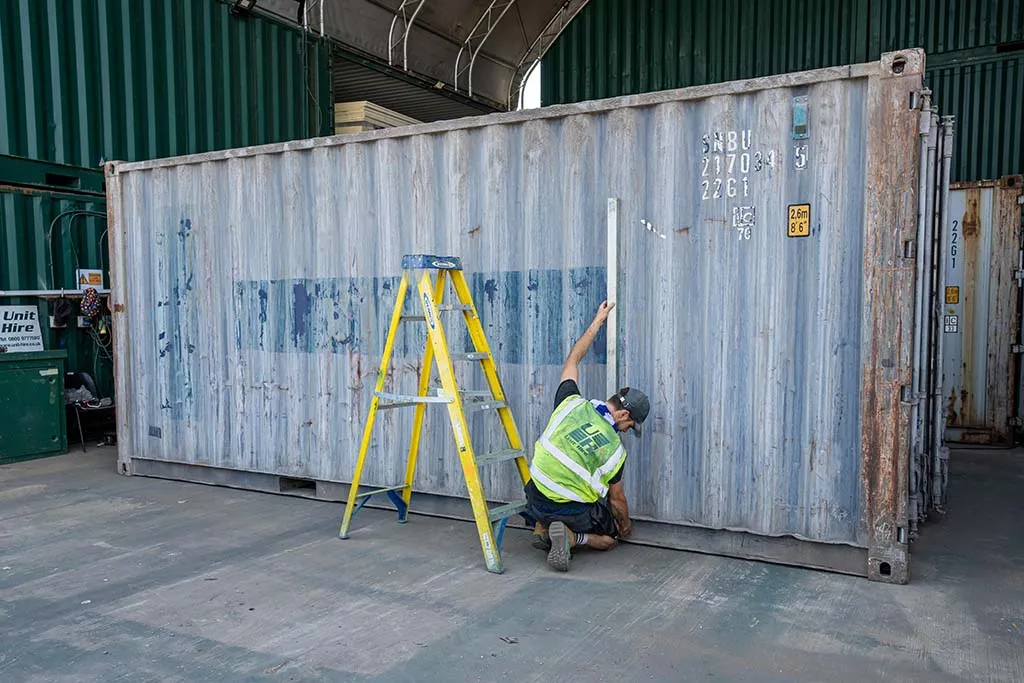
Containers must always comply with international transportation standards. Any damage, corrosion, or defect in the body, floor, or doors of a container not only jeopardizes the safety of the cargo but may also prevent its acceptance by shipping lines or customs authorities. Timely repairs not only extend the service life of containers but also significantly reduce the cost of purchasing new units. Furthermore, proper maintenance prevents potential cargo damage and avoids delays in delivery.
Container Repair Services
The type of repair depends on the extent of damage and the container model. Key repair services include:
- Body and roof repair: Fixing dents, welding damaged areas, restoring rusted or corroded sections, and replacing metal panels if necessary.
- Floor repair: Replacing or repairing wooden or metal floor panels damaged by moisture, heavy loads, or impact.
- Door and lock repair: Servicing locks, hinges, and doors to ensure safety and prevent water or dust ingress.
- Leak repair and sealing: Inspecting and sealing gaps to prevent water penetration.
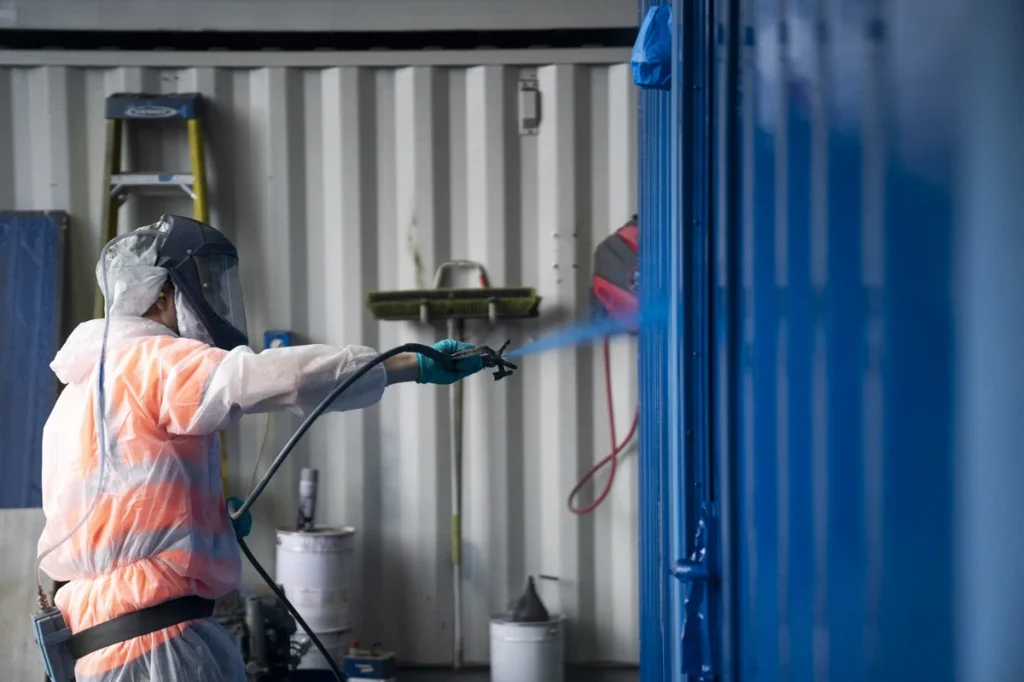
- Painting and protective coating: Repainting the container to prevent rust and extend its lifespan.
- Specialized refrigerated container repair: Inspecting refrigeration systems, repairing compressors, recharging refrigerant, and addressing electrical issues.
- Tank container repair: Inspecting and welding tanks, checking valves, and ensuring there are no leaks of liquids or gases.
- Open-top and flat-rack container repair: Strengthening the structure, inspecting side beams, and fixing damage from heavy loading.
Benefits of Timely Container Repair
- Extended equipment lifespan: Properly maintained containers can remain in service for many years.
- Cost savings: Minor repairs are far less expensive than purchasing a new container.
- Cargo safety: A well-maintained container ensures that goods reach their destination without damage.
- Compliance with international standards: Proper repairs maintain the container’s acceptance at ports and by shipping lines.
- Minimized operational downtime: Quick repairs prevent delays in loading and shipping.
- Improved appearance and quality: Repainting and restoring the container enhances its value in the second-hand market.
Conclusion
Repairing containers is an essential and unavoidable process for cargo owners and transportation companies. Every container, over time and under varying conditions, sustains damage, but regular maintenance and refurbishment can extend its service life, reduce costs, and prevent potential cargo losses. Specialized repair services ensure that all types of containers—including refrigerated, tank, open-top, standard, and flat-rack—are restored to optimal condition and ready for repeated use on long and demanding routes.